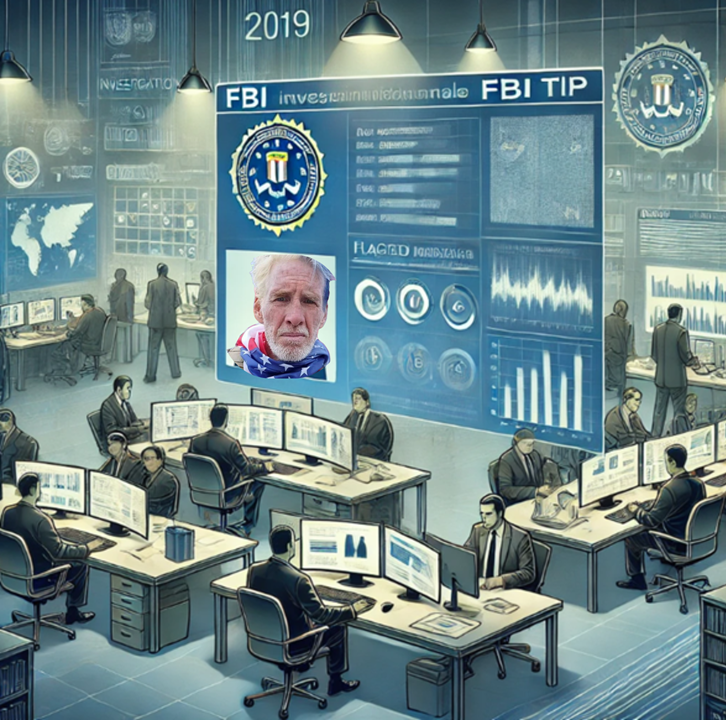


In a shocking development, the FBI revealed that Ryan Routh, the suspect in the second assassination attempt on former President Donald Trump, was the subject of a tip to the FBI in 2019. This new information raises critical questions about how closely individuals flagged by the system are monitored and whether the mechanisms designed to prevent such dangerous threats function as intended. This incident underscores the need for better vigilance and coordination between federal agencies and local law enforcement in handling potentially life-threatening risks to public figures.
A Troubling History
Routh, a 58-year-old man with a troubling criminal background that includes felony charges for stolen goods and a 2002 conviction for possession of a weapon of mass destruction, managed to evade sufficient scrutiny for years. While it’s commendable that law enforcement apprehended him before any harm could be done, one cannot help but wonder why someone with such a record was not more closely watched. The fact that a tip about Routh was received in 2019 and did not result in sustained surveillance or further investigation speaks to a significant lapse in preventive measures.
This brings to light a recurring issue in national security: the challenge of prioritizing and acting on tips promptly and effectively. In an age where information flows rapidly and threats are increasingly sophisticated, the ability of the FBI and local law enforcement to discern genuine risks from noise becomes more critical than ever. Unfortunately, in this case, the FBI’s response to a tip was insufficient, and only now, in light of an assassination attempt, are the necessary actions being taken.
Why This Matters Beyond Trump
While former President Trump is no stranger to threats against his life, this second assassination attempt highlights a broader concern: the increasing volatility of political tensions in America. Political violence, irrespective of the target or the ideological background of the perpetrator, is a direct attack on democracy. It seeks to silence through intimidation or destruction, which goes against the very principles upon which this nation was founded.
It’s important to note that this issue transcends Trump. Regardless of political alignment, any attack on a former or current president should be met with unequivocal condemnation. While Trump remains a divisive figure, his political opponents must recognize that normalizing or downplaying violence only emboldens extremists. Allowing political violence to grow unchecked invites chaos into the heart of our republic.
The Role of Online Presence
The FBI has also revealed that Routh maintained an “active online presence.” In today’s digital age, it is no surprise that much of the radicalization and planning of violent acts take place in the online world. Whether through forums, social media, or obscure corners of the internet, extremists find echo chambers to validate their views and, in some cases, encourage violent action. Authorities have rightly prioritized monitoring such activity, but the sheer volume of information online makes it difficult to filter out all threats. Yet, it is vital to understand that these platforms cannot serve as breeding grounds for extremism without consequences.
As long as platforms allow for the unfettered dissemination of extremist content and individuals like Routh have access to these networks, law enforcement will continue to face an uphill battle. Greater cooperation between tech companies and authorities is needed to mitigate such threats preemptively. The balance between preserving free speech and ensuring national security is delicate but essential.
Where Do We Go From Here?
This incident serves as a wake-up call for law enforcement and the public. The FBI’s system for handling tips, particularly those involving individuals with criminal histories, needs immediate review. Increased resources and training are necessary to investigate potential threats thoroughly before they escalate into life-threatening situations.
Moreover, Americans must reject political violence in all its forms. Extremism, from any side of the political spectrum, threatens the foundational values of the country. Political disagreements are part of democracy, but attempting to silence opponents through violence is not only unacceptable but deeply damaging to the nation’s fabric.
Like all public figures, former President Trump deserves protection from such attempts, regardless of one’s political stance. No one should be subject to violence for their views or actions, and this principle should be upheld without exception.
In conclusion, the second assassination attempt on Trump is not just an isolated incident. It reflects larger issues of extremism, law enforcement’s need for improved preventive measures, and the critical role that online platforms play in monitoring potential threats. To secure a peaceful and fair political future, we must all stand firm against violence, strengthen the systems designed to protect us and ensure that justice is swift and decisive for those who threaten the nation’s security.