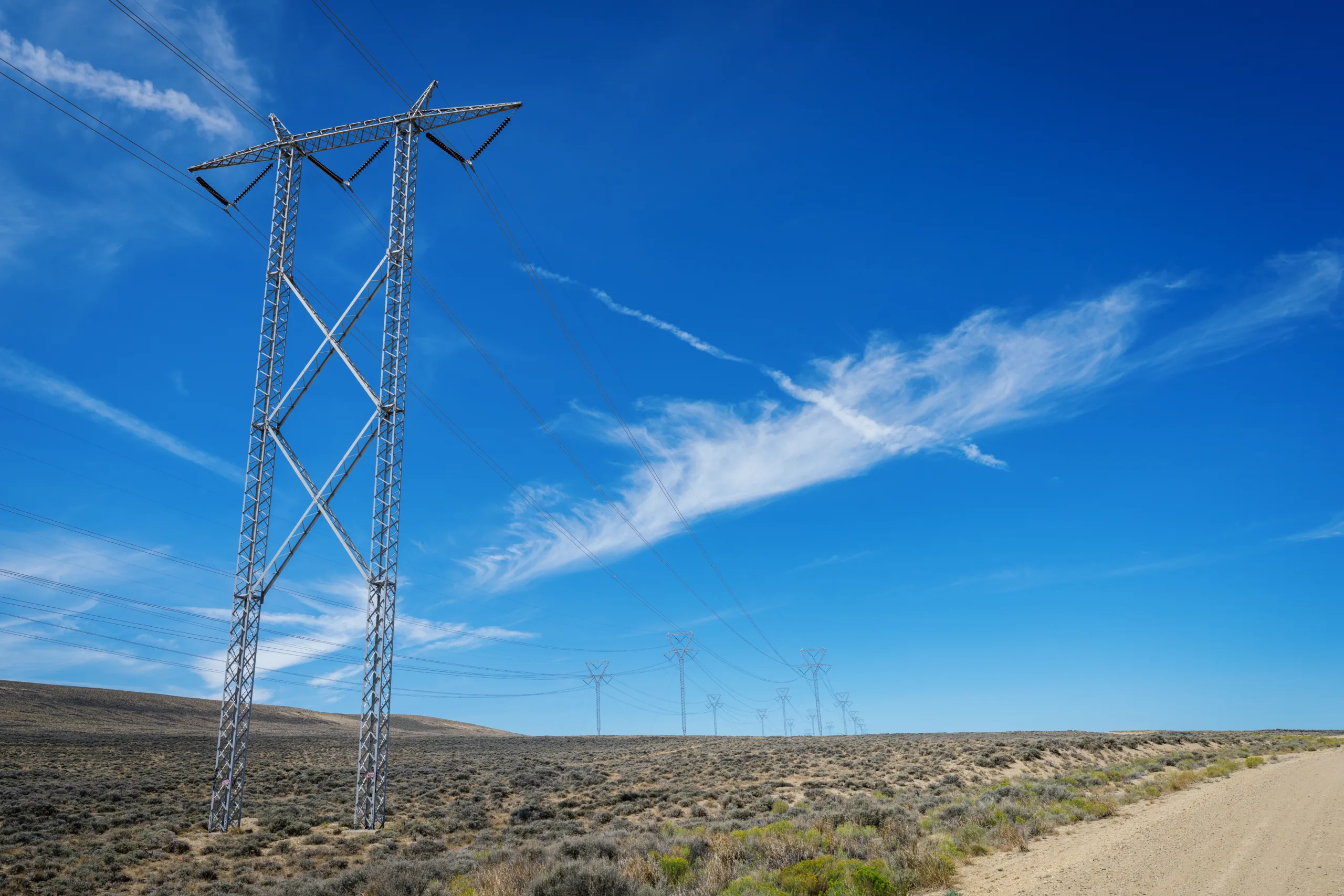


The Energy Department has offered a conditional loan of up to $2.8 billion for Wyoming Intertie, a proposed transmission project intended to move electricity between the eastern and western U.S. power grids. The Nov. 17 announcement advances financing for the line; it does not mean construction is complete or that federal money has already been disbursed.
The department’s announcement says the project would add about 1.8 gigawatts of transfer capability. Technical, legal, environmental and financial requirements must still be met before the department signs final financing documents and funds the loan.
What the line would connect
According to the developer’s project description, the approximately 106-mile route would cross Carbon, Albany and Platte counties, connecting substations near Medicine Bow and Wheatland. It is designed to carry electricity in either direction, rather than serve as a dedicated outlet for a single type of generation.
Grid United says that arrangement would let generators reach additional markets and let operators move power toward the region that needs it. The company says the line could carry electricity from all generation sources. Its proposed route still requires approval from county, state and federal authorities.
A long development process remains
Utility Dive reported Wednesday that Grid United expects to complete permitting in 2029, begin construction in 2030 and put the project into service in 2032 or 2033, depending on the availability of high-voltage direct-current equipment. Those are development targets, not a guaranteed opening date.
The publication reported that conditions for closing the loan include securing the full right-of-way, capacity contracts and the necessary permits. Land access and approvals therefore remain consequential steps even after the federal financing announcement.
What consumers should watch
DOE projects that a stronger connection could improve reliability during heavy demand and severe weather, and estimates up to $39 billion in electricity cost savings across 17 states. That is the department’s projection for the project, not a promise of a specific reduction on an individual household’s next bill.
For residents along the route, the near-term questions concern easements, the final alignment and regulatory review. The developer says construction will follow land-rights agreements and approvals, and identifies the early 2030s as the potential operating period.
The proposal adds to the wider debate over keeping electricity available when supplies tighten. Related coverage includes Puerto Rico’s use of household batteries during power shortfalls and the federal order keeping a Michigan coal plant available this winter.